
Build a Recurring AI Templates Business (Voice/Chat Agents + Automations)
Package proven AI voice/chat receptionists and automation templates into ROI-first offers. Sell, deliver, and scale retainers without bloated teams or overengineering.
What you'll build
A focused, high-ROI templates business that sells AI voice/chat receptionists and repeatable automations to local and SMB niches. You’ll validate fast, close with consultative discovery, deliver a working prototype, and convert into monthly retainers.
You’ll master one build stack, wire Twilio/call routing, plug calendars/CRMs, and add reporting — then scale distribution, referrals, and partner channels.
- Laser-niche into missed-calls and speed-to-lead use cases
- One-page offer site: problem → promise → price → proof
- Consultative sales: diagnose constraints, quantify ROI
- Voice/chat agent + automations shipped fast and tested
- Retainers ($300–$500+/mo) with outcomes tracked monthly
Platforms & tools


Step 1 — 🎯 Choose a laser-focused niche
Pick one industry you already know where missed calls and slow follow-up are costly and frequent (plumbers, HVAC, dentists, roofers, chiropractors). Prioritize high-volume, lower-ticket services: speed and coverage beat perfection here.
Define the flagship use case: AI receptionist (24/7 answer + booking) or speed-to-lead agent (instant text/call-back).
Hyper-niche beats general AI. Avoid low-volume/high-ticket niches where a 1–5% conversion dip can wipe out revenue; focus on repeat calls where every missed inquiry hurts.

nano banana — where you'll do this
Step 2 — ✅ Validate demand in a week
Run SCAN: Study (5–10 interviews), Calculate (lost-call math), Architect (simple agent), Narrate (results-first story). Pre-sell the outcome as if live; collect early adopters before building.
Do informational interviews and secret-shop competitors to learn current workflows, costs, and failure points. Email your waitlist with an early-adopter offer + payment link once 3–5 say yes.
Lead with revenue gained, costs saved, and time leverage — mention AI last. Case studies: results first, system second.
Step 3 — 🧾 Ship a one-page offer
Launch a barebones site (bolt.new, Lovable, carrd.co, Webflow, Framer). Structure: Problem → Promise → How it works → Deliverables → Timeline → Price → Proof → Guarantee → Book a call.
Quantify missed-call math prominently and clarify what’s in/out of scope.
Audit your copy: reduce AI buzzwords. Owners buy outcomes, not models or features.
Step 4 — 📣 Build distribution and a warm pipeline
Text your network: ask who needs an AI receptionist/chief-of-staff reclaiming 10–15 hours/week. Partner with creators and local operators; offer referral incentives. Host free AI office hours at coworking/realtor spaces.
Prioritize unsexy channels with compounding ROI: community posts, DMs with value, and meetups.


Distribution is your moat. Consistently do revenue-generating actions; skip busywork like pixel-perfect sites.
Step 5 — 🧲 Source, filter, and personalize leads
Pull lists via Apollo or LinkedIn Sales Navigator. Filter by titles: owner, founder, partner, principal, CEO, COO, CXO. Use Google Maps to find local businesses missing calls; prioritize those with lots of reviews and phone-dependent bookings.
Scrape with Ampify and send with Instantly. Use AI to mine websites/social for personalized insight and automate icebreakers.
 Google MapsFind phone-reliant local businesses↗
Personalize or be ignored. Market saturation is high; AI now makes deep personalization profitable.
Step 6 — ☎️ Run consultative discovery that closes
Call structure: 70% discovery, 20% solution framing (business outcomes), 10% next steps/objections. Use LRP: Listen to their week, Repeat patterns, Poke to quantify wasted time, errors, refunds, and interrupt-driven chaos.
Ask about their views on AI briefly, then pivot to constraints, ROI, and missed-call math. Use an assumptive close to move into a written proposal.
Subject: [Personalized hook for [Name]]

Hi there, I'm [NAME] from [FIRM]. Quick chat to learn your day-to-day so I can spot where we can give you time back and capture more leads. Good to start?

What’s your role? Team size? What tools run your day? Biggest headache this week? Where do calls/leads slip? Who chases info or copies/pastes? If I removed one weekly fire, which changes your week?
Listen → Tell me about your week from first call to booking.
Repeat → Sounds like [X happens], then [Y task], and [Z] causes delays — is that right?
Poke → Whose hours are those? At $[RATE]/hr, what’s that monthly? How often do errors/refunds happen? What interrupts you 9–12? If I remove one fire, which one changes your week?
Handle most objections upfront by diagnosing honestly. Clients care about time saved, money made, and reduced risk — not architectures.
Step 7 — 💼 Scope, price, and propose
Write a clear scope: objectives, inclusions, exclusions, timeline, client responsibilities, payment terms. Price to ROI with simple math (missed-call value, time saved, conversion lift). Offer a pay-for-performance or satisfaction guarantee when appropriate.
Close with an assumptive line and book onboarding.
All right, [NAME], I’ll send the proposal with details and a kickoff date. Sound good?
If you're not happy when I deliver, or it doesn't deliver the value we discussed, you'll get your money back.
Pitch outcomes in plain English. Reframe case studies to show results first, then mention the AI system.
Step 8 — 🧱 Commit to one build stack for 90 days
Choose one: GoHighLevel, Google AI Studio (Gemini), ChatGPT (Custom GPTs) + one automation layer (Make, n8n, or Zapier). Expect 3–4 weeks to functional fluency if consistent.
Master fundamentals: prompts (system → user → assistant), APIs, webhooks, and test-first development.
System: You are [ROLE], for [BUSINESS], speaking in [TONE]. You must [PRIMARY OBJECTIVE] and collect [FIELDS].
User: [TASK with exact inputs/constraints].
Assistant: Confirm you will [OUTPUT FORMAT], ask [CLARIFYING QUESTIONS], and call [FUNCTION] when you have [REQUIRED FIELDS].
You don’t need to be a coding wizard — just reliably ship outcomes with a stable stack.
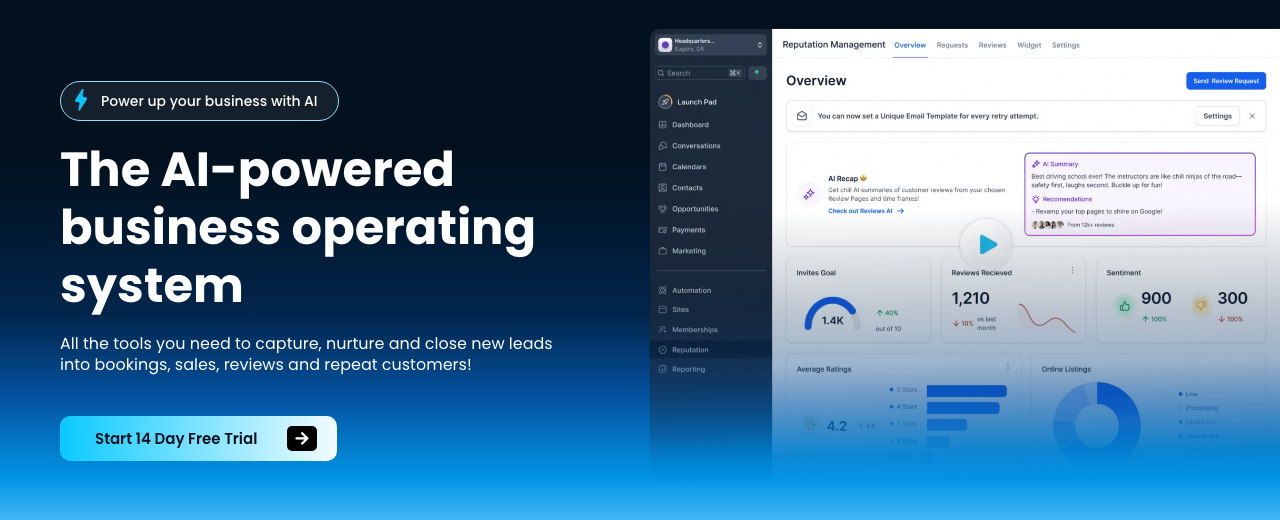
HighLevel — where you'll do this

N8N — where you'll do this
Step 9 — 🔧 Nail APIs, webhooks, and test-first habits
APIs are URLs you send requests to and get data back. Steps: find auth method, copy a working example (curl/postman), ship a minimum viable request. Use webhooks to receive data and trigger flows.
Build from the end backward. Add one module at a time; test thoroughly before adding the next. Send test webhooks from a browser or tools like ClickUp to validate.
APIs expose more power than drag‑and‑drop steps. Expect simple issues (wrong endpoint, encoding); diagnose calmly and iterate.
Step 10 — 🛠️ Build the voice/chat agent shell
Create the initial agent with a friendly greeting and clear objective (collect contact details, qualify, book). Keep it transparent that it’s AI and focus on a great experience.
| Platform | What to do in this step |
|---|---|
| GoHighLevel | Create a Voice AI agent named after the business. Set the initial message with business name and purpose. Enable call handling. |
| Google AI Studio (Gemini) | Create a Voice agent. Set system instructions for lead capture and qualification. Enable live API for voice. |
| ChatGPT (Custom GPTs) | Create a Custom GPT for website chat/FAQ. Define guardrails (what it can/can’t say) and required fields to collect. |
Voice agents are better received when users know it’s AI and the experience beats traditional phone trees.
Step 11 — 📚 Train with client data and industry questions
Feed the agent a structured knowledge base and a question bank. Crawl the client’s site (About, Services, Reviews, Service Areas) and add industry-specific qualifiers (e.g., insurance, address, unit type).
Tune tone and advanced prompts; configure exact fields to collect (name, email, phone, address) as per client preferences.
| Platform | What to do in this step |
|---|---|
| GoHighLevel | Create a Knowledge Base; use Web Crawler to ingest site URLs. Add industry Q&A. Adjust Advanced Prompt and response tone. |
| Google AI Studio (Gemini) | Attach documents/URLs; add system instructions to collect fields and submit to your lead endpoint. Create an industry question bank. |
| ChatGPT (Custom GPTs) | Upload PDFs/links; define instructions to answer from these sources only. Add required fields and escalation rules. |
You are a helpful, friendly AI agent for [BUSINESS]. Your primary goal is to collect the user's full name, email, and [PHONE/COMPANY]. Be conversational and transparent. Once you collect all required info, call the [SUBMIT_LEAD] function. Do not ask for other personal information. Introduce yourself before starting.
Customize tone and required fields per niche. Add 2–4 industry-specific qualifiers to reduce back-and-forth.
Income Forecast
Wire telephony, chat, and scheduling so the agent can answer, qualify, and book — then notify the team instantly.
| Platform | What to do in this step |
|---|---|
| GoHighLevel | Buy/link a local/toll-free number. Set ring order: client team first, then AI if no answer. Link website live chat, SMS, Facebook, and WhatsApp (if applicable). Connect Google Calendar/Jane via native or webhook/Cal.com. |
| Google AI Studio (Gemini) | Publish voice agent through Twilio for phone routing. Add system instructions to submit leads and book via Cal.com/Google Calendar webhooks. |
| ChatGPT (Custom GPTs) | Embed chat on site. Connect booking via Cal.com or custom webhook. For phone, pair with a separate voice stack (e.g., GoHighLevel or Twilio workflow). |
Keep owners in the loop: ring humans first, route to AI if missed, and notify on every appointment/conversation.
Step 13 — 🧪 Test end‑to‑end and demo live
Call the number and interact with the bot. Validate greeting, tone, data capture, booking flow, and CRM logging. Enable instant notifications for new leads/appointments.
On sales calls, live-dial the agent to show it working with their brand details (credibility > slides).
Not setting reply/booking notifications tanks conversions. Turn on SMS/email alerts for owners immediately.
Step 14 — 🧩 Build backend automations
Orchestrate data capture → qualification → booking → CRM/logging → notifications. Start from the final action and work backward. Test every branch as you add it.
Schedule recurring tasks via trigger.dev or Modal; keep logic in GitHub for versioning.
| Platform | What to do in this step |
|---|---|
| Make.com | Create a Webhook module to receive leads. Use HTTP module: set URL, method, headers (Authorization: Bearer [TOKEN]), and JSON body. Add filters and routers; test each route. |
| n8n | Use Webhook node to receive data. Import a working curl to prefill HTTP Request node. Add Function nodes for transforms. Test with sample payloads. |
| Zapier | Start with Webhooks by Zapier (Catch Hook). Add Code/Paths. Push to CRM/calendar/email. Use Zapier Interfaces only if it shortens delivery. |
Avoid multi‑agent Rube Goldberg machines. Thin, reliable automations beat complex academic builds.

Make.com — where you'll do this
Step 15 — 📬 Integrate calendars, CRMs, and email reliably
Connect Google Calendar/Jane/Cal.com for bookings. Post leads to the client’s CRM (or GoHighLevel) and send owner notifications. Add provider API keys (Anthropic, Perplexity, Gmail) where needed for enrichment or follow-ups.
Unify contact records and tag source/campaign for reporting and retainer reviews.
Clients already have too many tools. Own the outcome: fewer tabs, clearer results.
Step 16 — 📑 Deliver paid assessments and upsell with reports
Offer a paid audit of operations/systems to locate time waste and drop-offs. Record/auto-transcribe calls; analyze with Claude to suggest off‑the‑shelf tools. Package findings into a branded report with Gamma.
Send the assessment within 48 hours and book a 30‑minute walkthrough to upsell implementation.
I've attached a transcript of my call with [BUSINESS]. Identify their top 3–5 pain points. For each, recommend off‑the‑shelf AI/software that can be implemented immediately. Include: tool name, what it replaces, expected ROI (time saved or conversion lift), risks, and a 30‑day rollout plan. Keep it pragmatic and low‑risk.
Charge for audits. Underpricing (e.g., $200) hurts perceived value and reduces upsell success.
Step 17 — ⚡ Prototype and assets in 90 minutes
Plan 15 min → Build 60 min → Record 15 min. Use proven automation templates and adapt to the client’s niche. Generate a branded lead magnet and 30‑day content plan via Ask AI or AI Studio.
Show the complete package with their colors and content — a demo of the finished product triggers commitment.
Don’t overengineer. Ship a proof of concept that proves ROI; refine after it’s producing value.
Step 18 — 🚀 Launch manually, concierge‑style
Turn the system on, monitor closely, and personally handle escalations. Only do what AI can’t: talk to people, negotiate, interpret nuance, handle feelings.
Use the voice agent for assessments instead of asking clients to record Looms — lower friction equals better adoption.
Show a working agent on their number. Publishing and telling people has little extra friction vs building — do it early.
Step 19 — 💵 Package, price, and retain
Frame pricing against ROI: missed calls × close rate × average job value (e.g., HVAC $1,000/job, 25% close → $250 per missed call).
Common: AI receptionist retainers $300–$500/month; premium bundles up to $6,200 for 3 months with leads/tools; one‑off builds often $1,500–$10,000+ (some $4k–$12k). Shift from one‑offs to monthly retainers and advisory/revenue share where fit.
If needed for entry, a low anchor (e.g., $100 to prevent $250/call loss) can open doors before upselling.
Subject: [Personalized hook for [Name]]

Hey [NAME], you’re doing [PROCESS] manually ~[HOURS]/week. If your time is $[RATE]/hr, that’s $[WEEKLY]/week → $[MONTHLY]/month → $[YEARLY]/year. I’ll build a system that removes it. Paying me $[PRICE] is a no‑brainer: you get back [HOURS] hours/month and ~$[SAVINGS]/year.
In high‑ticket sales, even small conversion drops matter. Compare cost savings against potential revenue loss before automating sales touchpoints.
Step 20 — 🧱 Expand offerings with more agents
Add adjacent templates: speed‑to‑lead SMS, sales bots, document processors, onboarding/ops bots, and website chat agents. Build Custom GPTs on client data to deflect FAQs and compress onboarding (e.g., internal Slackbot cut onboarding from 6–8 weeks to 2–3).
Explore niche apps (e.g., travel companions that text options via Twilio; AI curtains/furniture placement). Use Gemini’s native video/audio understanding for richer inputs. Keep tools thin and focused.
Subject: [Personalized hook for [Name]]

Hey, I built a workflow that solves [X PAIN POINT]. I’ve got a 60‑second demo showing how it works. Want me to set it up for you?
Subject: [Personalized hook for [Name]]

Hey [NAME], I’m mapping the top drains in [NICHE]. In 15 minutes, I’ll quantify your biggest bottleneck and show where AI helps (and where it doesn’t). No pitch unless you ask — just learning how to provide real value.
Package multiple simple tools for one persona. Avoid sprawling all‑in‑ones; thin utilities win.
Twilio — where you'll do this
Step 21 — 📈 Scale with distribution and systems
Stack agents and workflows; keep headcount minimal. Batch tasks (all cold emails, then all proposals). Outsource cold calling/ops once playbooks are stable. White‑label GoHighLevel to create recurring bundles.
Build authority: host meetups, share working demos, repurpose content (Opus Clips, Descript, VO3). Productize only after steady closes and partner-driven promotion.
Subject: [Personalized hook for [Name]]

Hey, I redesigned your website using AI. Here it is: [LINK]. If this seems interesting, let me know. If not, your marginal cost was basically nothing.
Walk first: freelancer → consultant → then team. Scale people last; scale distribution and systems first.
Step 22 — 🧭 Operate, retain, and prove value
Track and surface KPIs monthly (speed-to-lead response, booked appointments, show rate, conversion lift). Use DashThis for dashboards. Proactively share wins and next experiments.
Notify owners instantly for every appointment/conversation. Position agents as augmenting staff, not replacing them. Aim for ongoing retainers, advisory roles, or revenue shares when value is proven.
Regular check‑ins prevent churn and create referrals. Don’t disappear after delivery.
Step 23 — 🛡️ Advanced dev workflow & reliability
Push workflow code/snippets to GitHub. Schedule and orchestrate with trigger.dev or Modal. Host always‑on workers on a VPS (e.g., Hostinger).
Use model slash‑commands to manage context (/clear, /context, /compact, /slr). When using agentic dev tools, select your interface (terminal/desktop/web/IDE extension), allow controlled edits, and use natural language to diagnose/fix errors. Keep tests close to every module.
Test-driven development isolates bugs fast. Add one module, test, then move on.
Mistakes to avoid
Competing broadly against well-funded firms erodes margins; hyper‑niche instead.
Multi‑agent Rube Goldberg systems slow delivery and reduce perceived value.
Automating low‑volume/high‑ticket steps risks big revenue losses from small conversion dips.
Perfecting websites/cards beats the ego, not the P&L. Do outreach and calls.
Tie to pain and ROI; AI outputs (text/images) alone are commoditized.
Handle concerns during diagnosis, not at the end of the call.
Risk‑averse or failing businesses make miserable projects; qualify strictly.
Unclear inclusions/exclusions ruin margins and delivery timelines.
Copy‑pasted emails without personalization get buried; markets saturate fast.
Thinking you need many subscriptions stalls starting. Pick one stack and ship.
Begin at the end outcome; test each path to avoid dead ends.
Requesting Loom recordings adds friction; use voice agents or live calls instead.
Owners don’t need model details. Lead with time, money, and risk reduction.
Without solid scoping, dev/sales handoffs destroy margins.
Believing talent alone sets income is a trap; consistent action compounds.
Skipping recurring check‑ins forfeits testimonials, referrals, and upsells.
Do custom projects first to learn fast; productize after steady closes.
Wrong endpoints/encodings happen. Test minimal calls and iterate.
If users think it’s a human, frustration rises; be transparent and helpful.
Not setting instant notifications kills conversion speed and revenue.
Income Forecast
Resources
Table of Contents
This guide is 1% of what members get
All 7 tools, 100+ grounded playbooks and 252 vetted tools, prompts and repos — on one membership.
Land your dream job. Start your dream business.
Swipe real ATS jobs — we fill out and submit each application.
Score your resume 0–100 against live roles before you apply.
Recruiter-tested one-page resume, auto-built from your LinkedIn.
Paste a job link — get tested + your fastest study path.
252 vetted tools, prompts, repos and GPTs across 86 categories.
338,947+ live ATS jobs across 18,000+ company boards.
100+ grounded, step-by-step income playbooks.
Join free today — All-Access is $7 for 7 days, then $27/month. Cancel anytime.
Learn More →